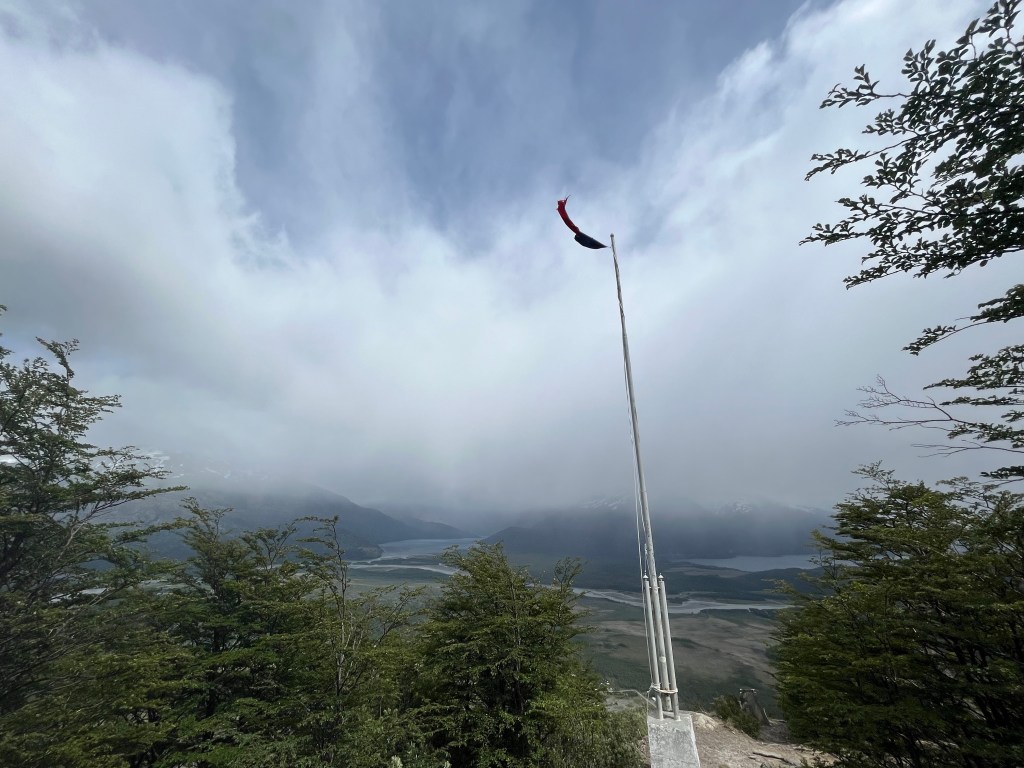
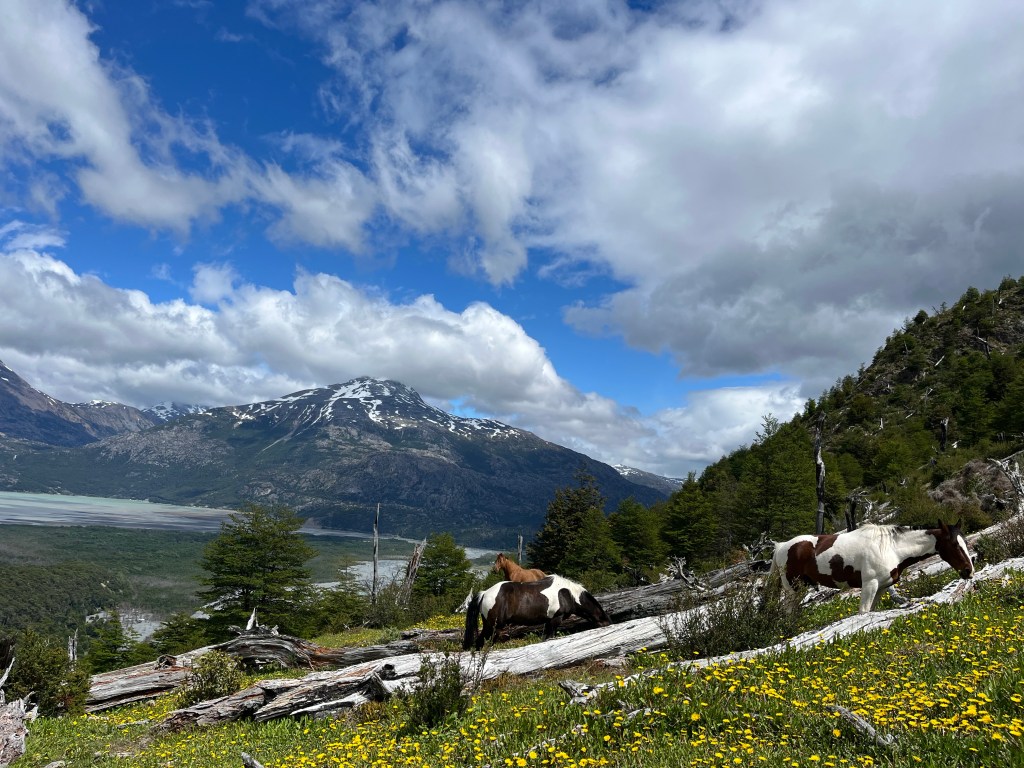
Waking up in O’Higgins, we decided to do a short hike close to town that came highly recommended. It was called La Bandera, and it was supposedly short but quite steep for the first mile. We ended up hiking about 1,500 ft of vertical across the first mile, up to the bandera (the flag), and then had an easy, scenic two mile descent where we happened to see some wild horses grazing. We could also see a nice glacier in the distance. It did casually hail on us a bit, but we’re used to that now. Also in O’Higgins, Jay found an article that seemed to say that the National Parks were open again, at least in the Magellan region (where Torres del Paine is), so we started getting really excited that our plan may have worked! Our fingers were crossed.
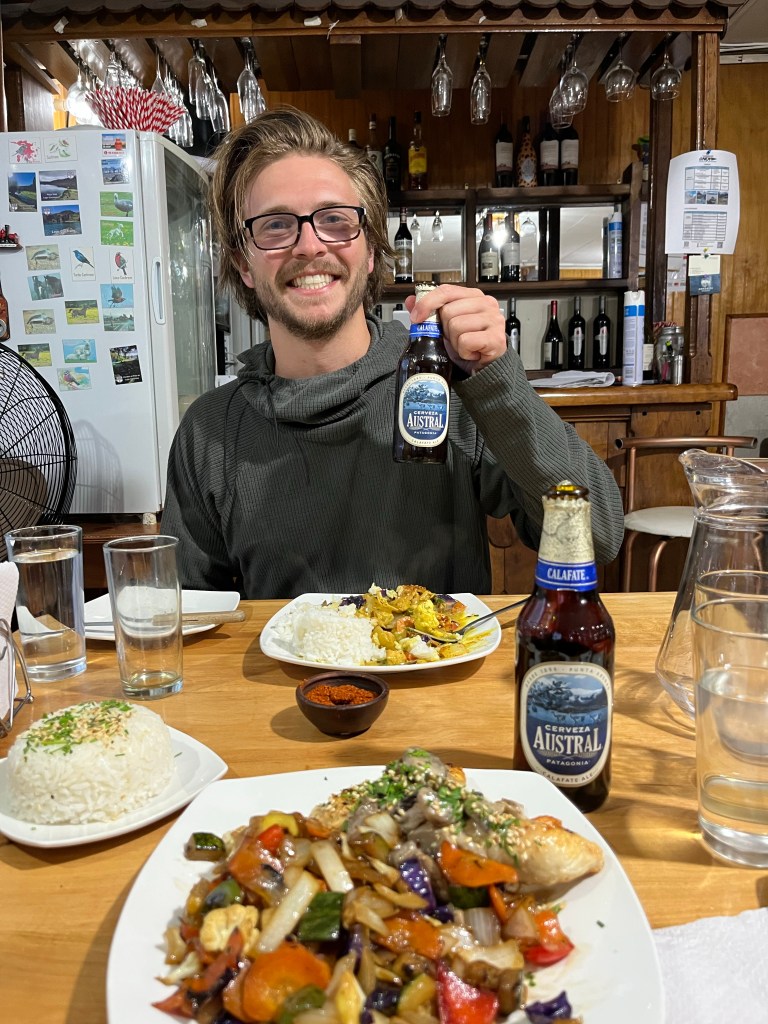
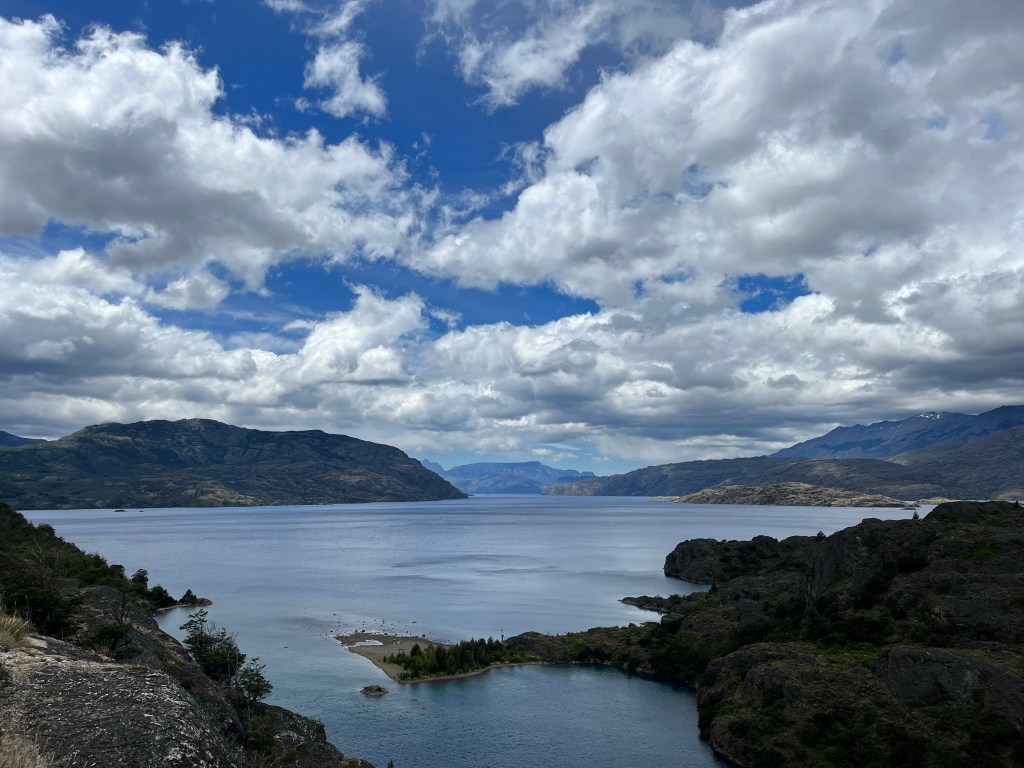
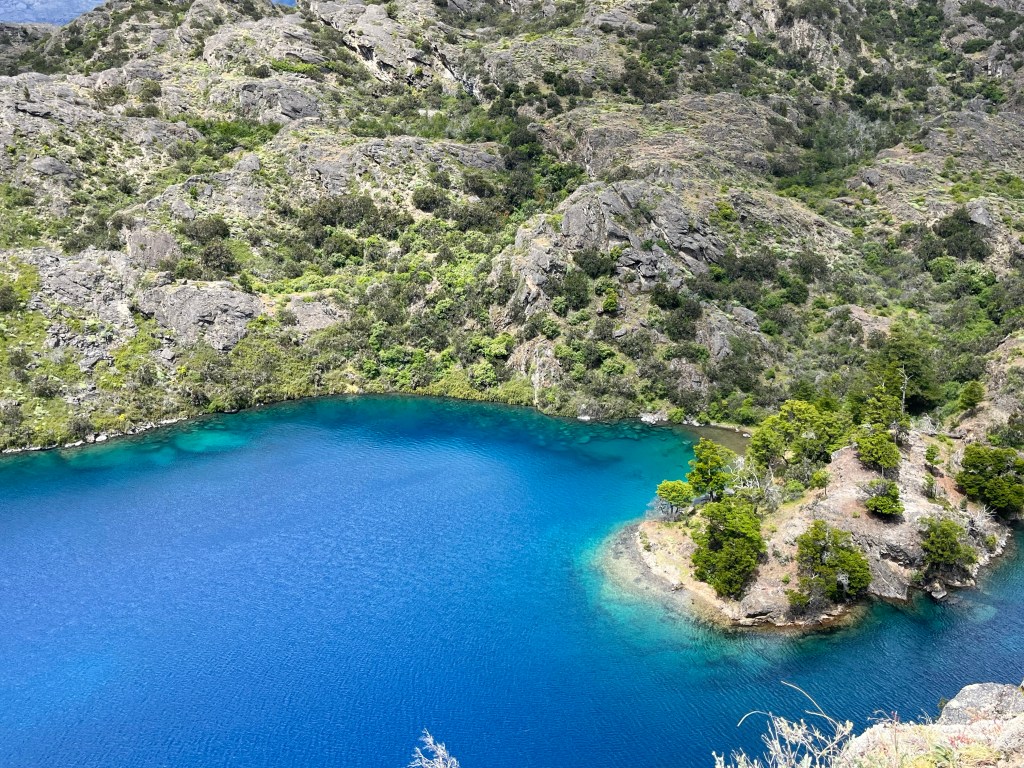
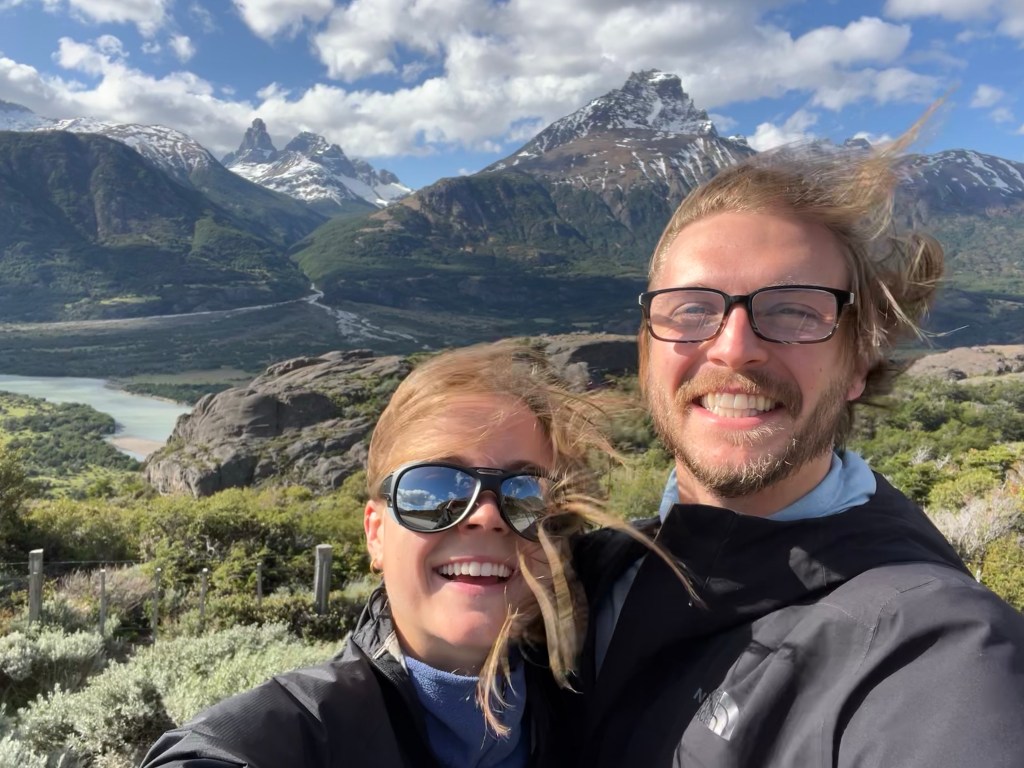
After the hike, we drove back to Cochrane and had Thanksgiving dinner. This was one of the best meals we had on the trip; after a meat, cheese, and bread-based diet, we were able to enjoy some chicken, rice, and sautéed vegetables. The next morning we headed to Patagonia National Park, in search of an easy trail with sore legs from the steep climb the day before. However, as we’ve learned, easy hikes are not widely available here. Neither are the roads into some of the parks … We actually almost got stuck in some muddy loose gravel while attempting to enter the park. Crisis was averted, and we picked a hike that looked easy and offered nice views of Cochrane Lake. A hike marketed as six miles turned out to be eight, but we still enjoyed the trail and the beautiful views of the green/blue lake and bright red wildflowers. I would say this was one of the first time we experienced major Patagonian winds – the main lake viewpoint was perched on top of some rocks that required a few sets of stairs and ladders to access, and the winds were definitely blowing up there. Patagonia National Park is one of the newer national parks in Chile, and we were glad we were able to experience some of it. After the hike, we drove to Villa Cerro Castillo with plans to hike to Cerro Castillo the next morning – a hike we’d been hoping to do on the way down, but the weather was bad and the park was closed anyway.
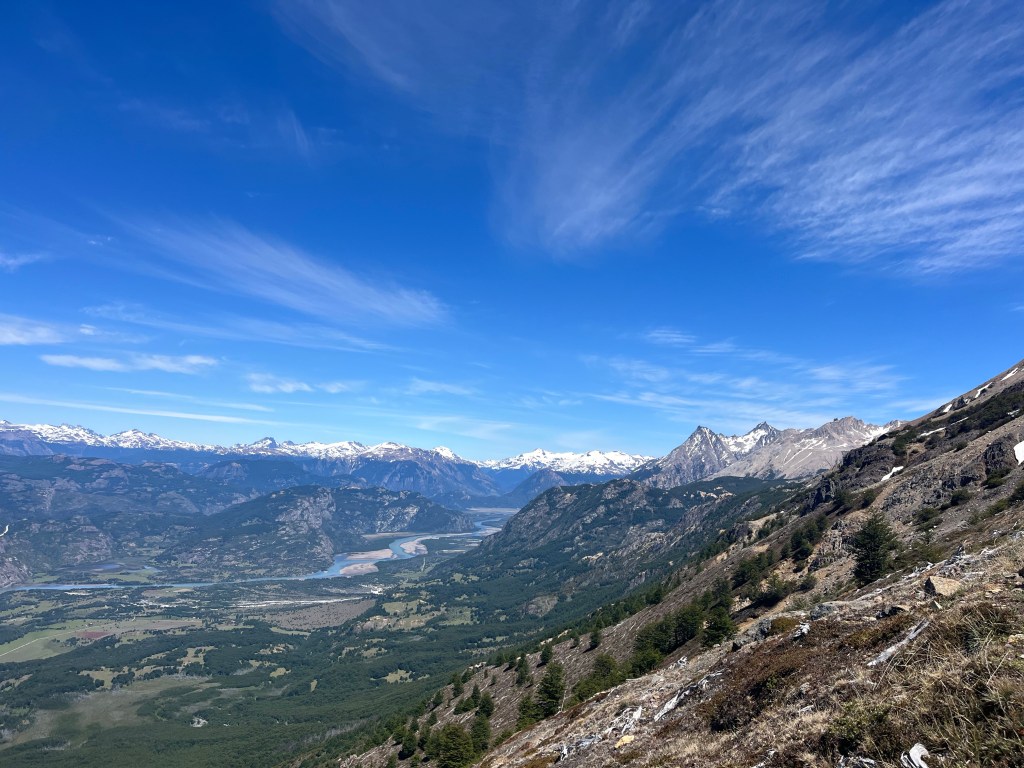
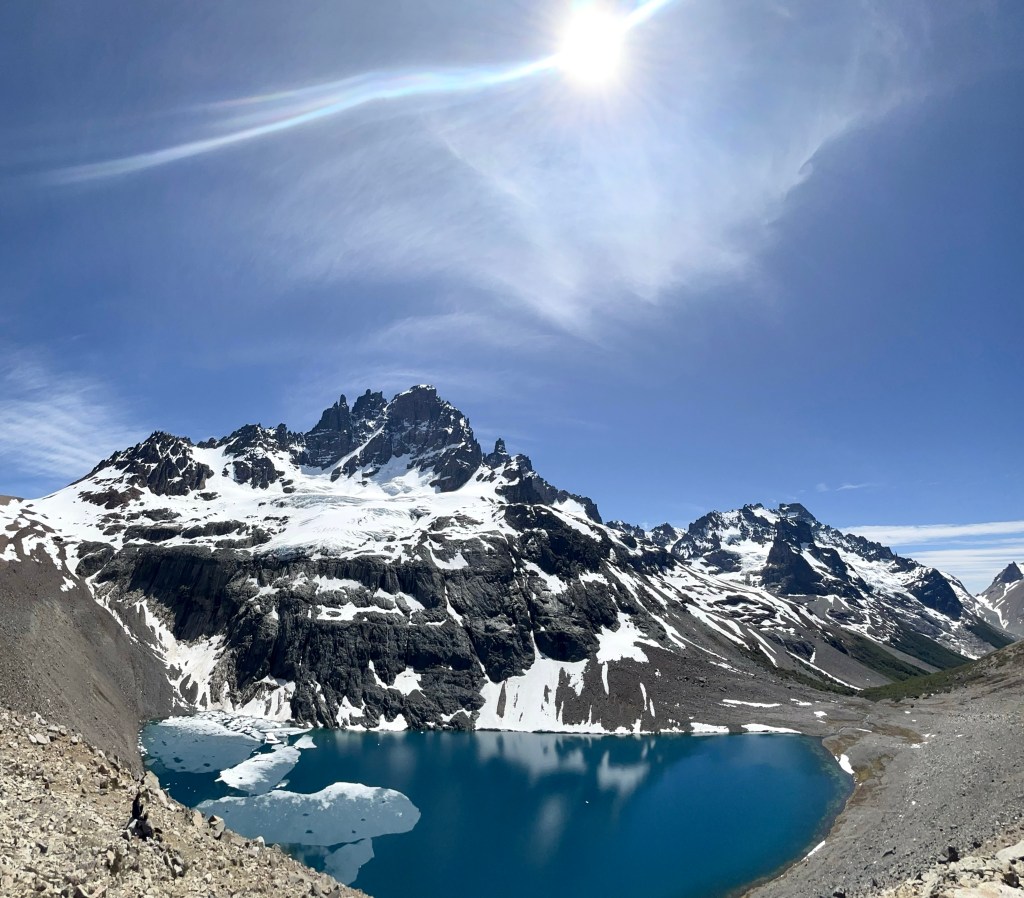
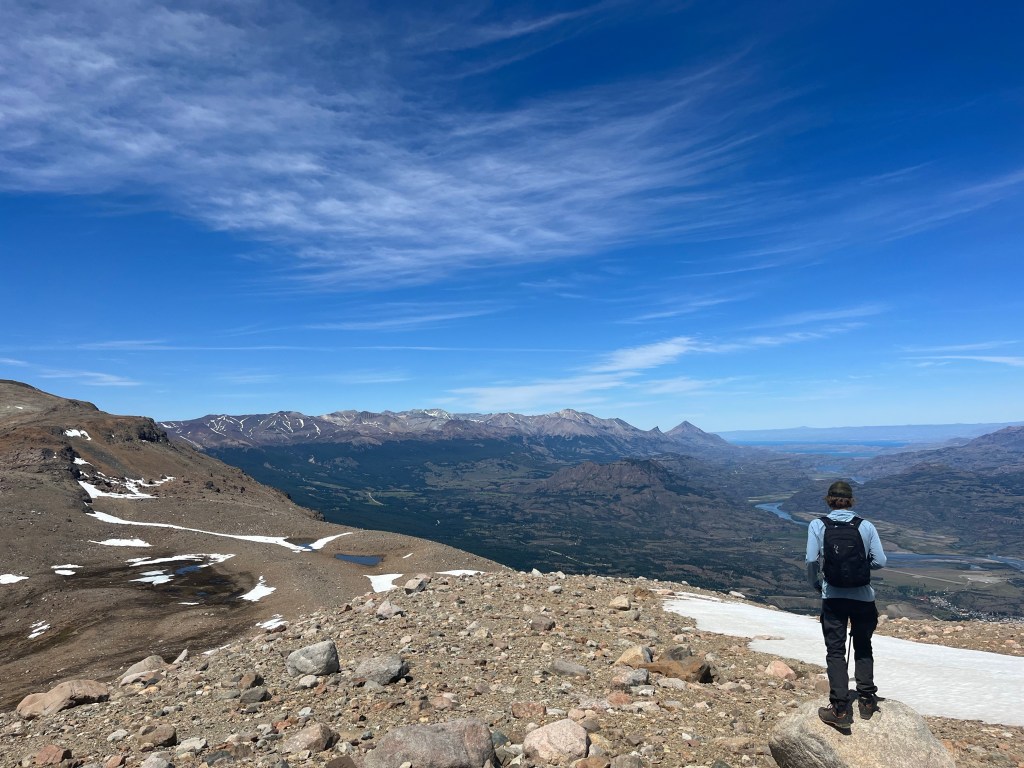
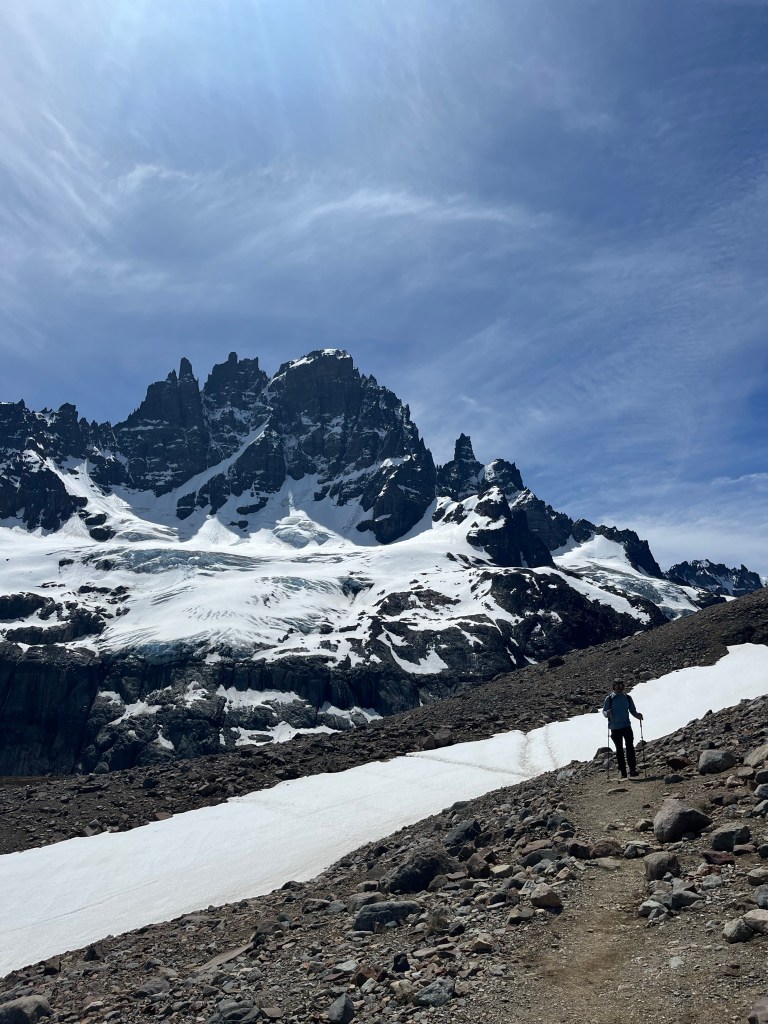
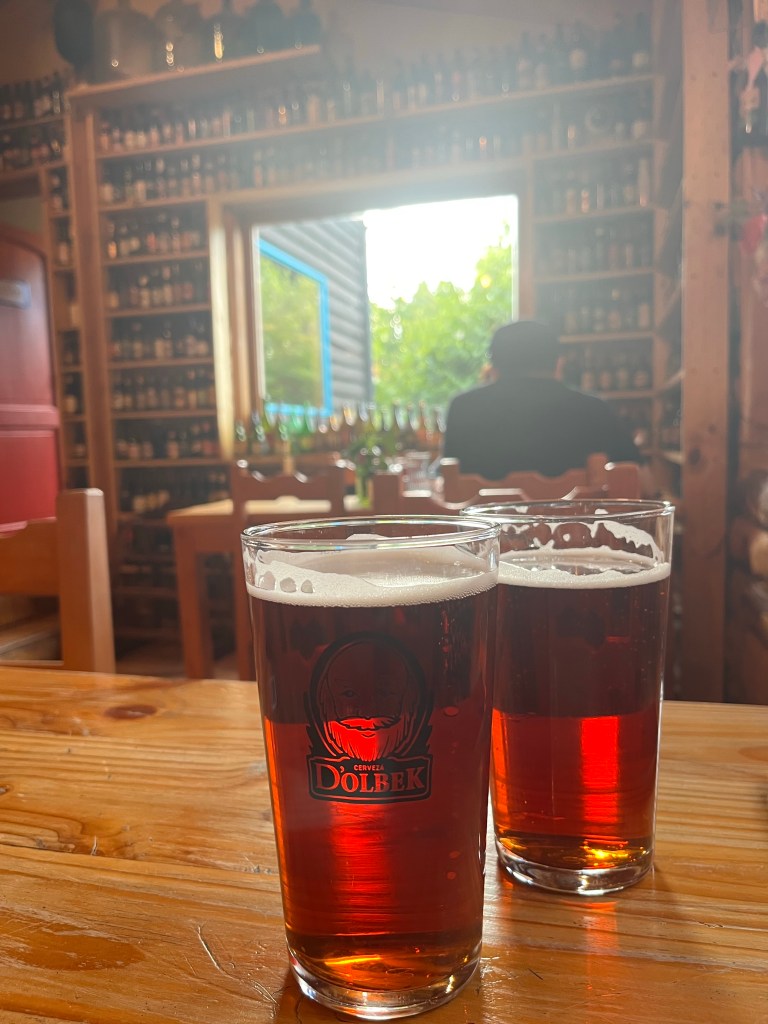
In the morning, we headed to the hike and realized the start of the trailhead is on private property. Weird being that it’s in the national park, but we proceeded. Crawling under fences was becoming normal? This hike was nine miles with about 3,500 ft of elevation gain, so we anticipated it being difficult, but we ended up thoroughly enjoying it. The trail was quite exposed and had beautiful panoramic views of the surrounding mountains and the river below. You could even see the winding Carretera. We put on our micro spikes for a few snow/ice crossings, and marveled at the consistent views. There were also a number of unique volcanic rocks sprinkled across the mountainside. When we reached the end of the hike, we were met by a crystal blue glacial lake seated beneath the towering Cerro Castillo. This view left us speechless. Cerro Castillo is a massive, deep black mountain, topped with sharp spires that truly give it a castle-like shape. Not to mention this was one of the best weather days on the trip thus far. All around, today was one of our favorite hikes and certainly a highlight along the Carretera Austral. Yet another highlight was meeting a Swiss couple that informed us that the National Park strike was totally over. This meant we should be able to visit all the places we had missed on the way down! We definitely got lucky, but our plan seemed to have worked 🙂 After the hike, we drove to Coyhaique and checked out the Dolbek brewery – home of our beloved Dolbek Maqui. After a few pints and, of course, pizza and cheeseburgers, we crashed at a place in town. I haven’t mentioned it, but we’ve typically been spending the night in “cabañas” – it turns out this means cabins, not cabanas, in Spanish. These are usually small buildings with one or two bedrooms, a bathroom, and a little wood-burning stove to keep it warm. We found these charming, cozy, and also affordable.
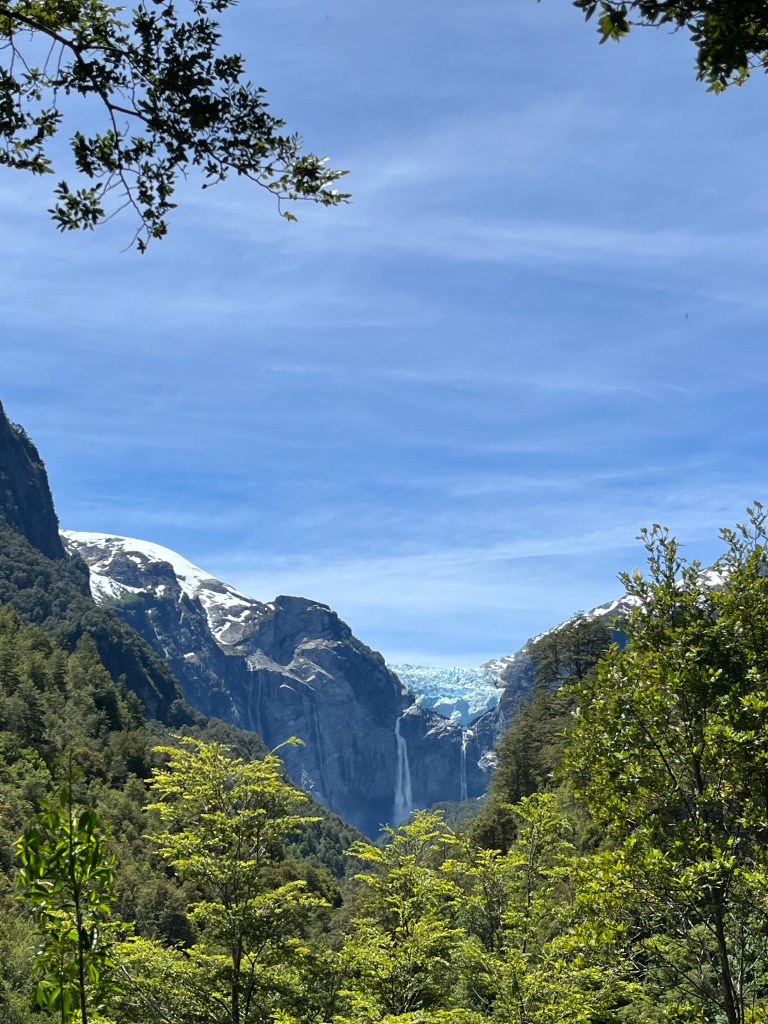
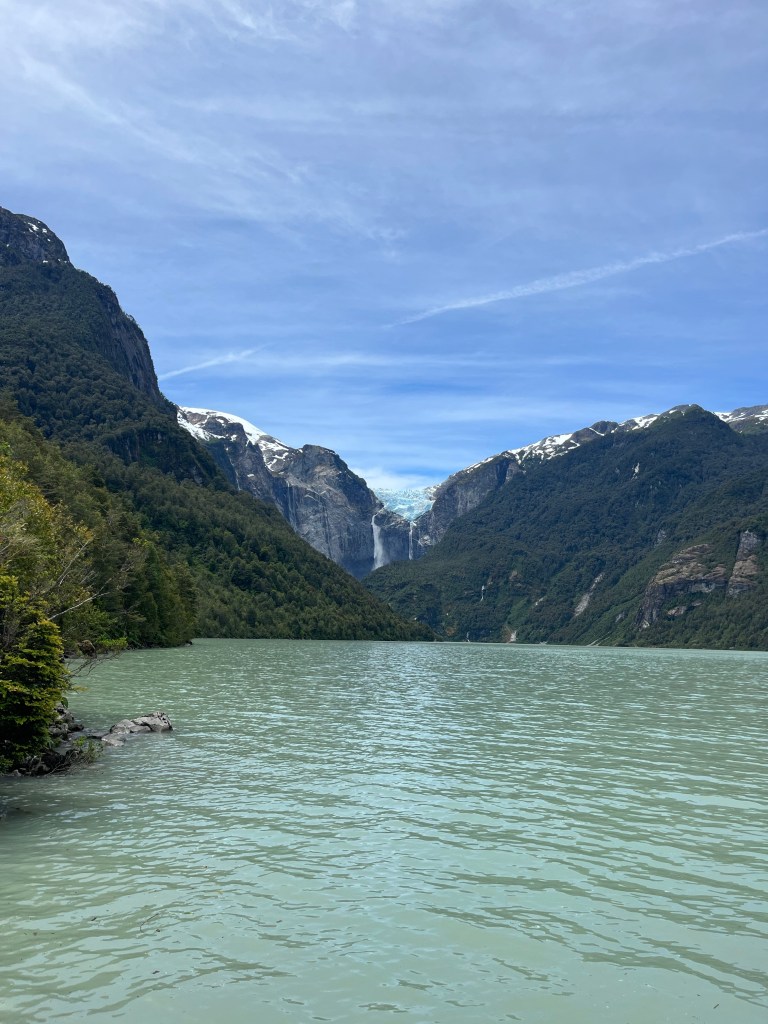
The next morning we returned to Queulat National Park where we were able to check out the famous hanging glacier. It was beautiful, truly hanging over the cliffside, but with tired legs we stuck to the short viewpoint trails. From one, we could see the glacier through the forest, and from another, we could see the lake that the glacier feeds via two waterfalls. After taking in the views, we drove to Puyuhuapi to enjoy a chill afternoon/evening. We decided to do our own laundry because on this trip we had been surprised by how much money we had to spend at laundromats. It turned out to be hard work, and we were left with damp clothing that didn’t smell 100% clean or fresh … no wonder they charge so much!
The next morning, we drove just outside of Puyuhuapi and visited Corcovado National Park. The entrance to this park was quite understated, off the side of the highway with no signs. We hiked about 4 miles and viewed another spectacular hanging glacier. Another funny thing that happened here (funny in hindsight) was that I got swarmed by bees… I was wearing a bright red shirt that happened to match the red flowers on the trail perfectly. The Patagonian bumble bee, Bombus Dahlbomii, is the largest bumble bee in the world! Fuzzy, bright orange, and yes it has a funny name. The queen bee can be up to two inches long – pretty scary if you ask me. Jay gave me a different colored shirt, and the bees almost immediately left me alone. Lesson learned.
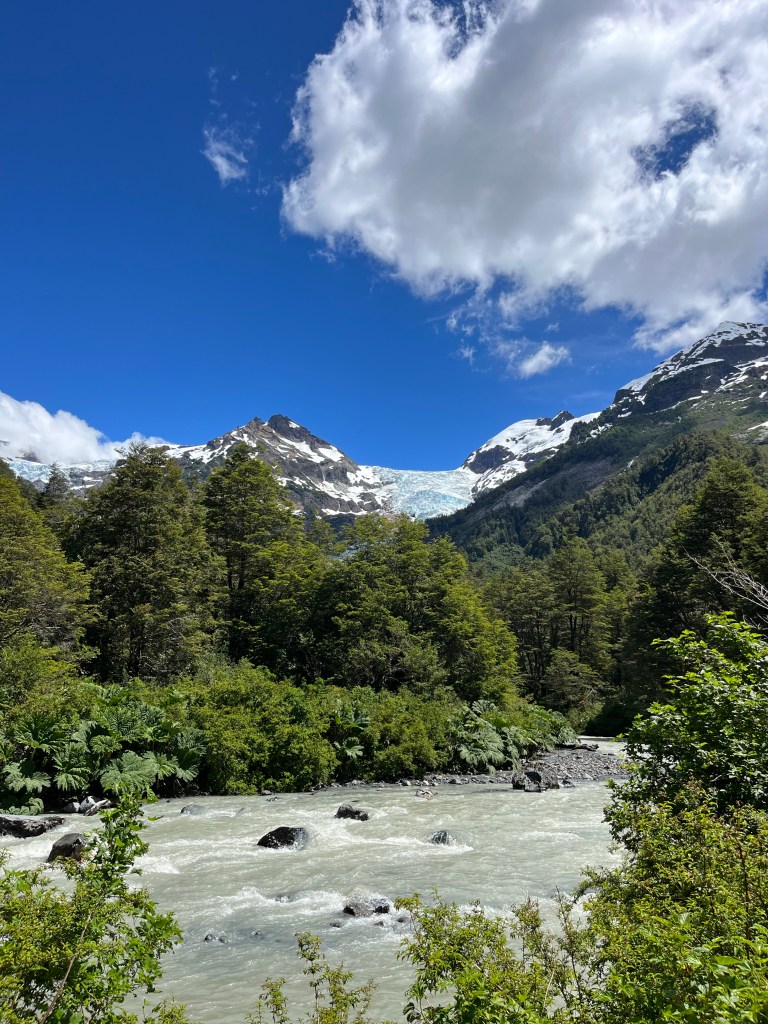
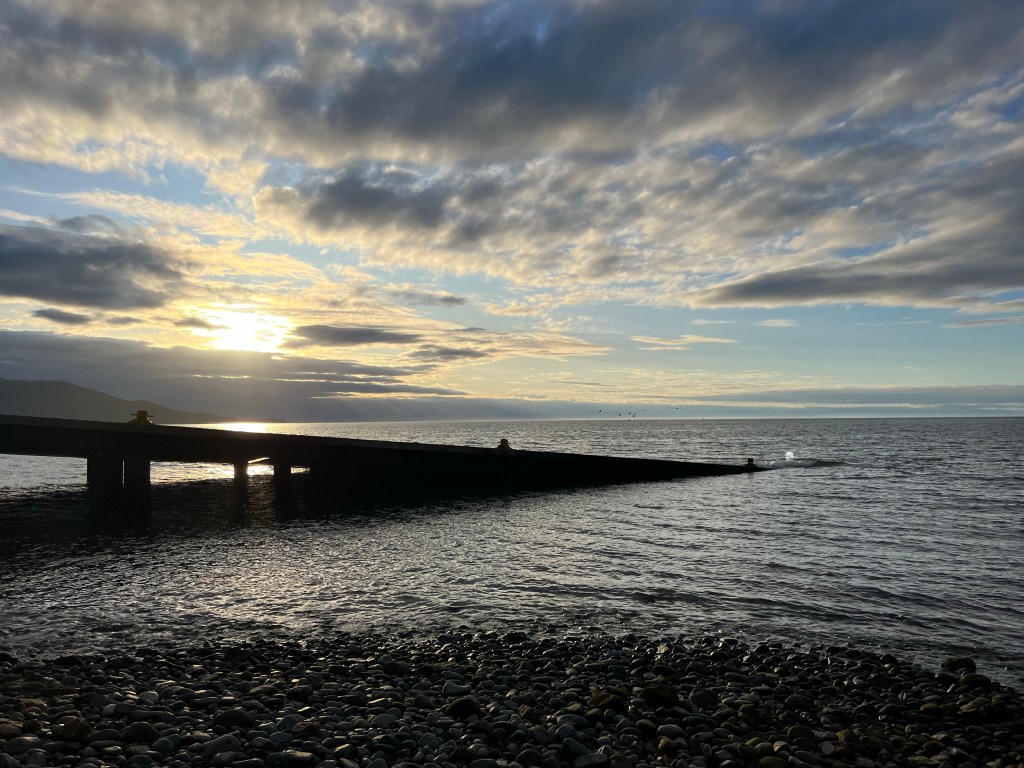
We drove a bit further to Chaitén, where we would take the ferry that night. Sad to be ending this chapter of our journey, we stepped onto the rocky beach while we waited for the boat to arrive. We were pleasantly surprised to see several dolphins as well as mother swans, swimming with their babies on their backs. We watched the sunset over the water and felt grateful for the past two weeks on the road.
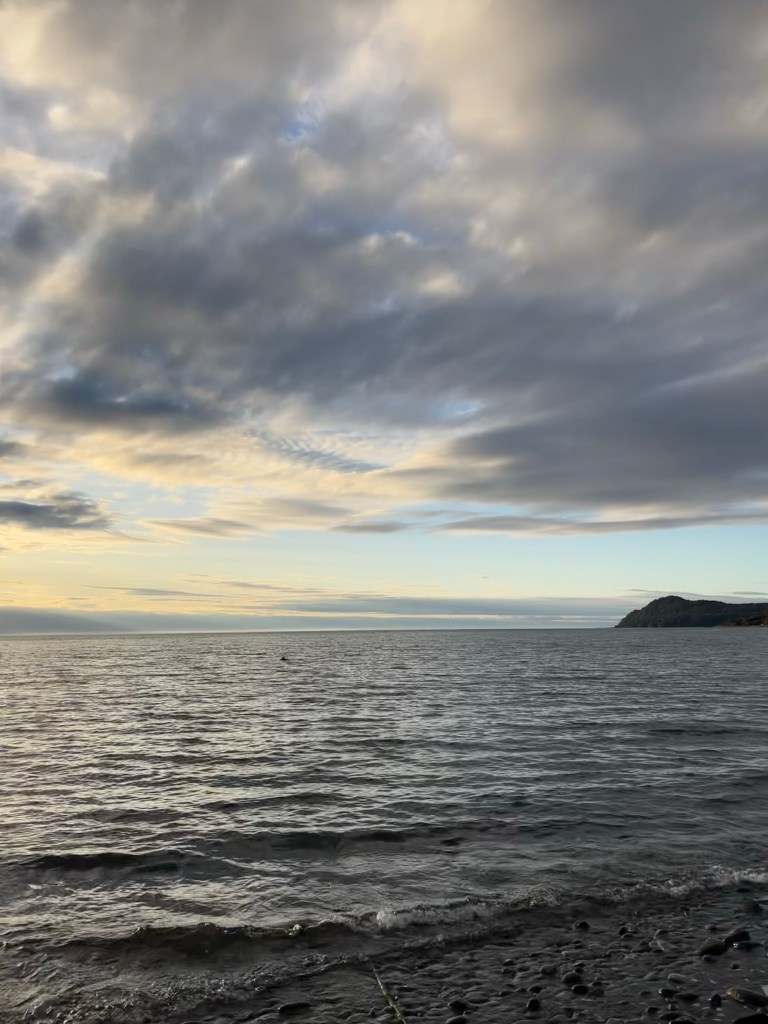
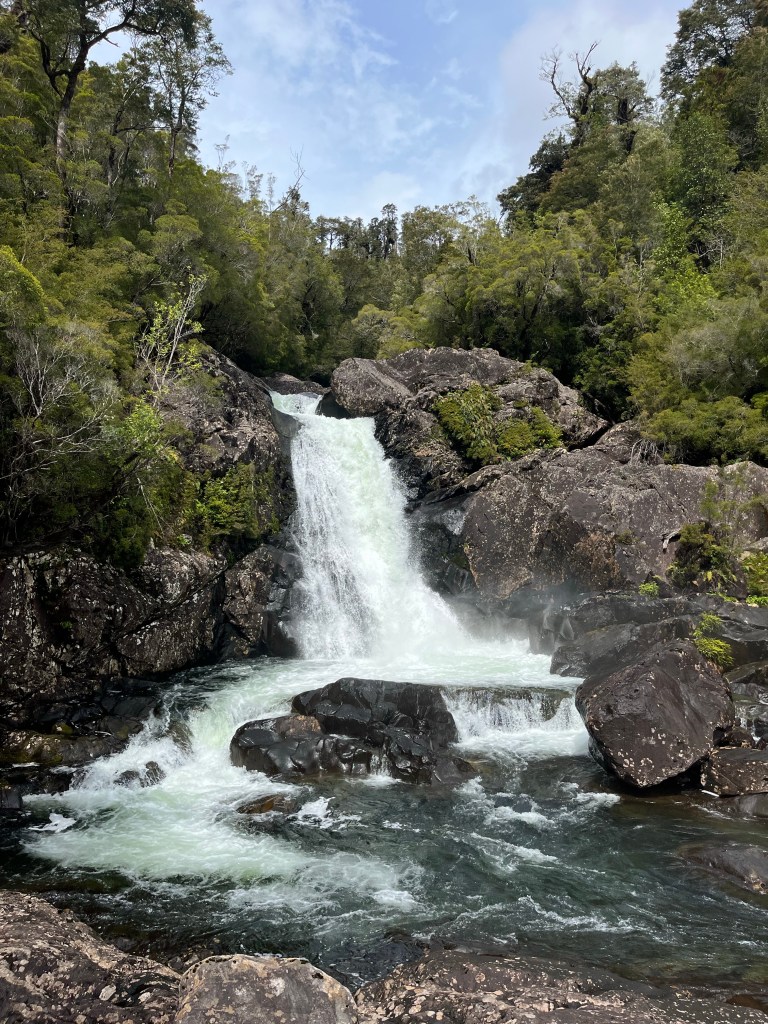
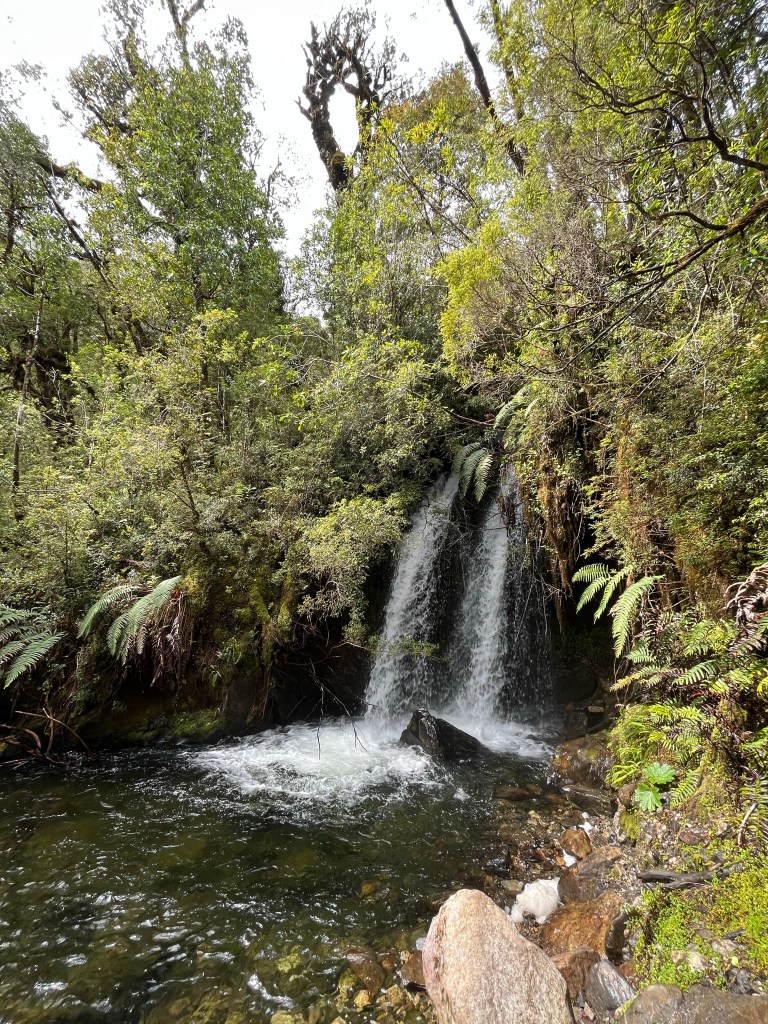
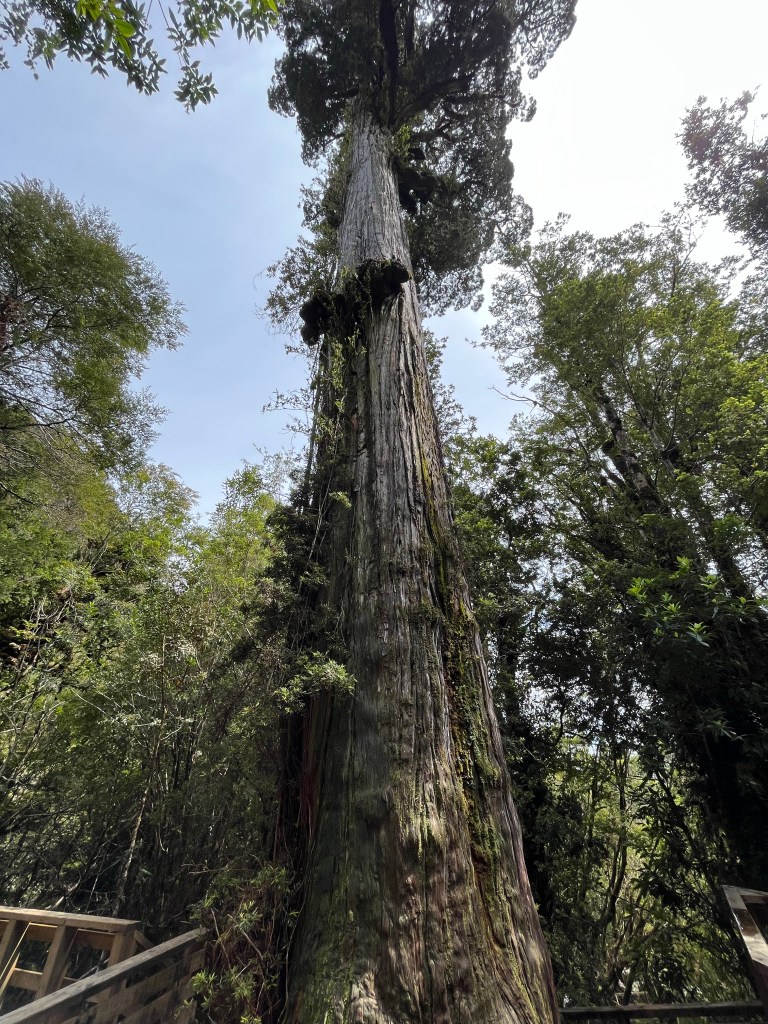
The overnight ferry gave us the chance to visit one more national park in the morning, Alerce Andino National Park, right outside of Puerto Montt. This was our eighth national park of the trip. We found a chill hike that allowed us to see a few more alerce trees and two nice waterfalls. After everything that we’d seen, this park felt like classic Patagonia – beautiful forests of towering, ancient trees, crystal clear waters, and powerful hidden waterfalls. We spent one last night in Puerto Montt with an early flight out to Punta Arenas the next morning.
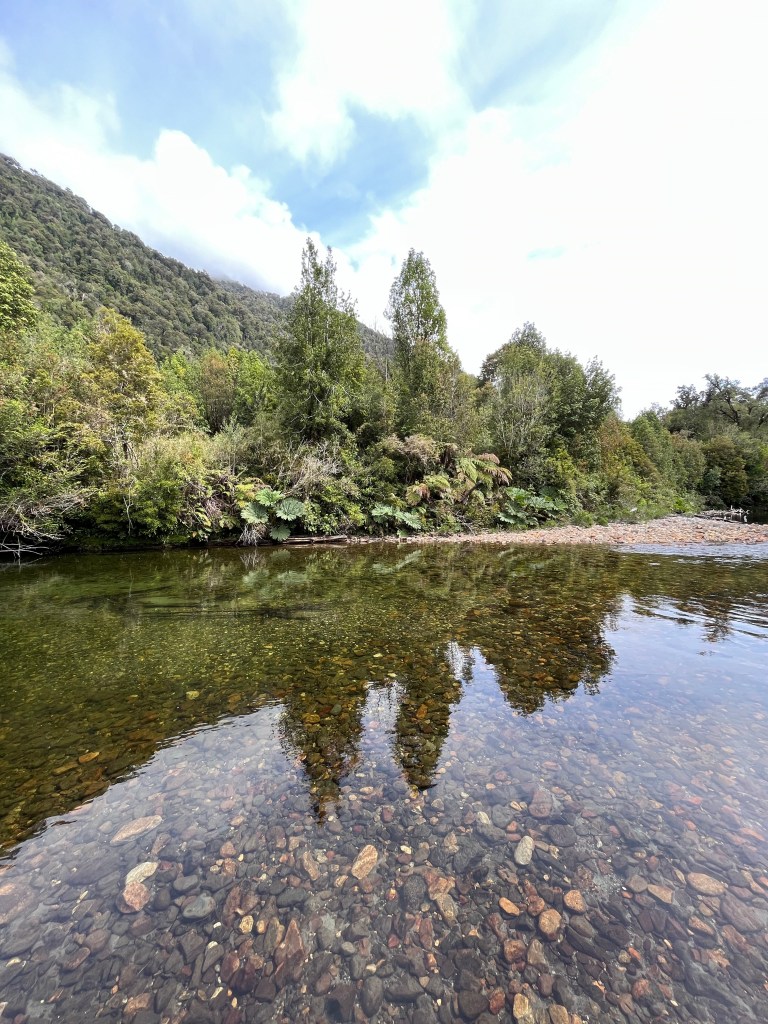
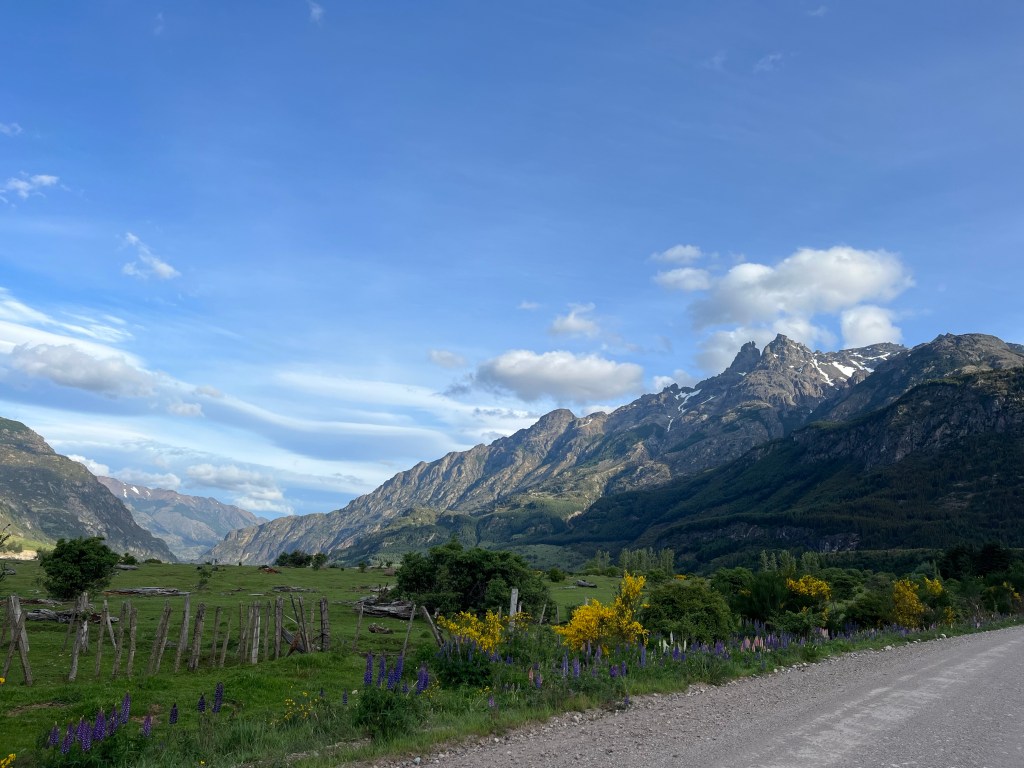
I’m still reflecting on this trip, and on this road trip segment in particular. What I do know, though, is that driving a road that feels so rugged, natural, and integral to the landscape, is a unique and worthwhile experience. The land and weather in Patagonia are absolutely wild, and the fact that they even built this highway is pretty crazy. The wilderness fights it; there are road closures every day due to huge pot holes, land slides, and falling rocks. Around every twist and turn in the road there is a breathtaking view. It’s hard not to stop 10-15 times per day to marvel and take pictures, and to be honest, we did. Driving the Carretera Austral really makes you want to stop and smell the roses. I think that’s a life lesson, albeit cliché, that people can’t hear enough.


Leave a Reply