Volunteering day 1 – Peje
Volunteering day 2 – Dakovica
Volunteering day 3 – Gjalin
Volunteering day 4 – Metrovica
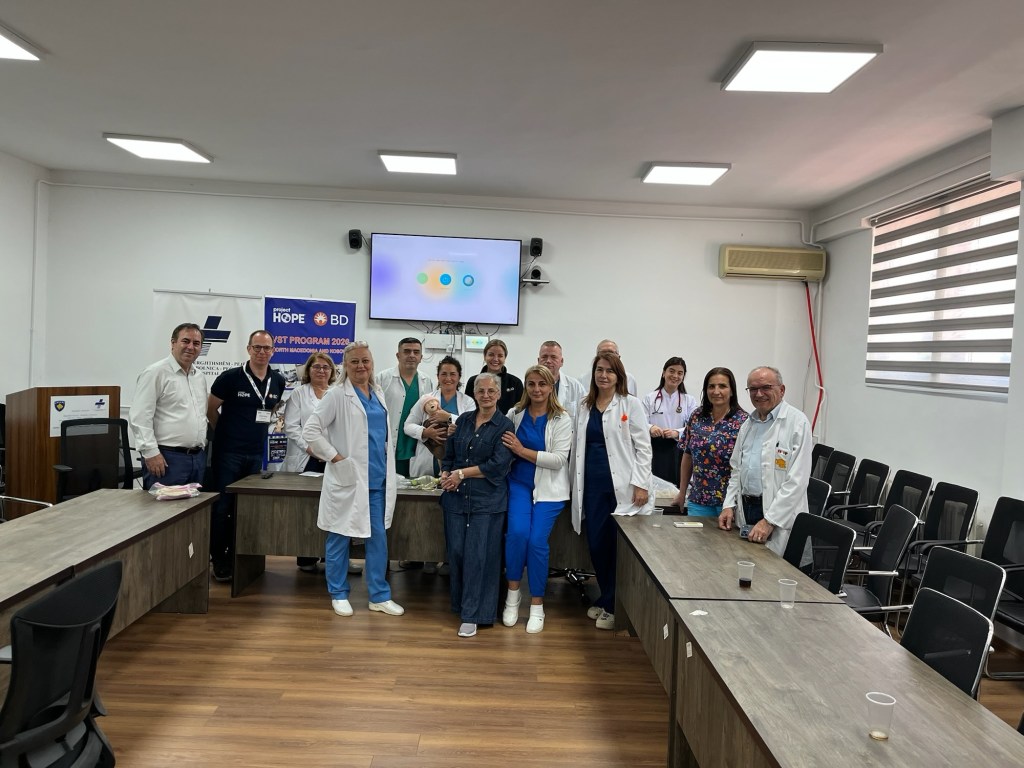
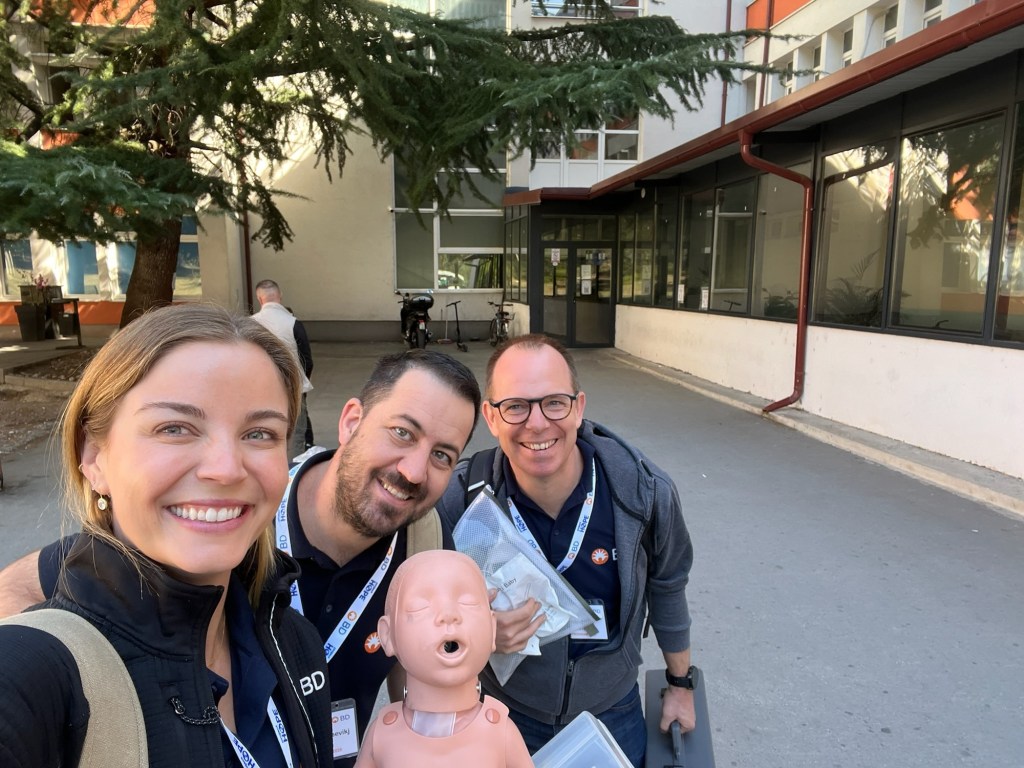
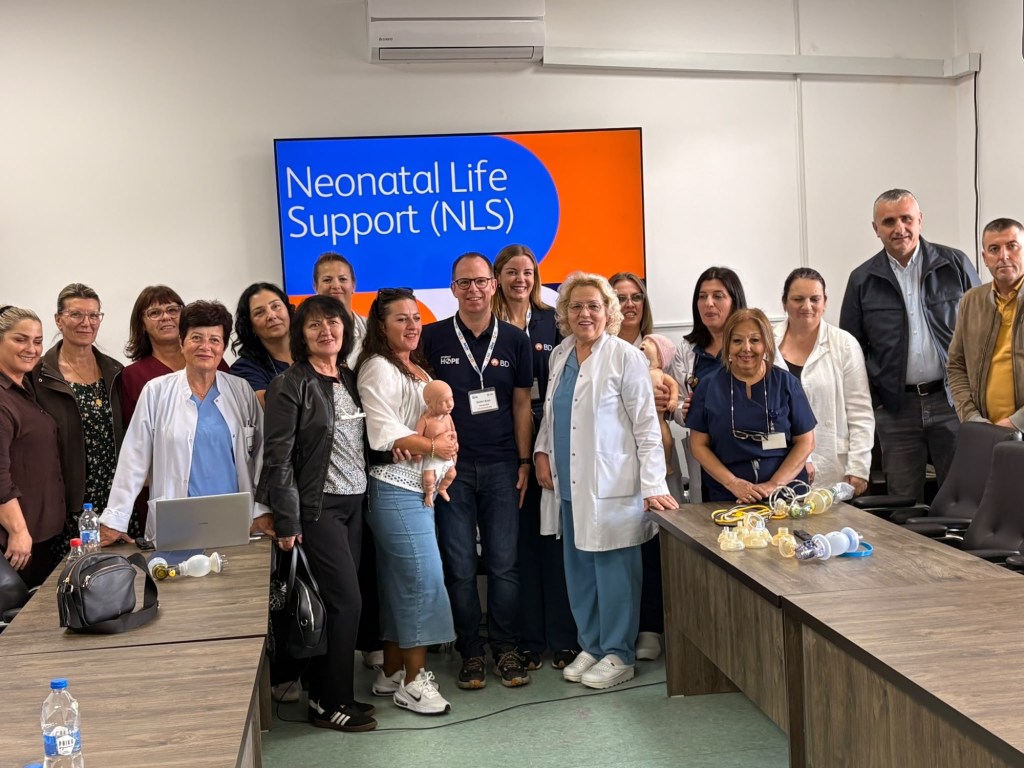
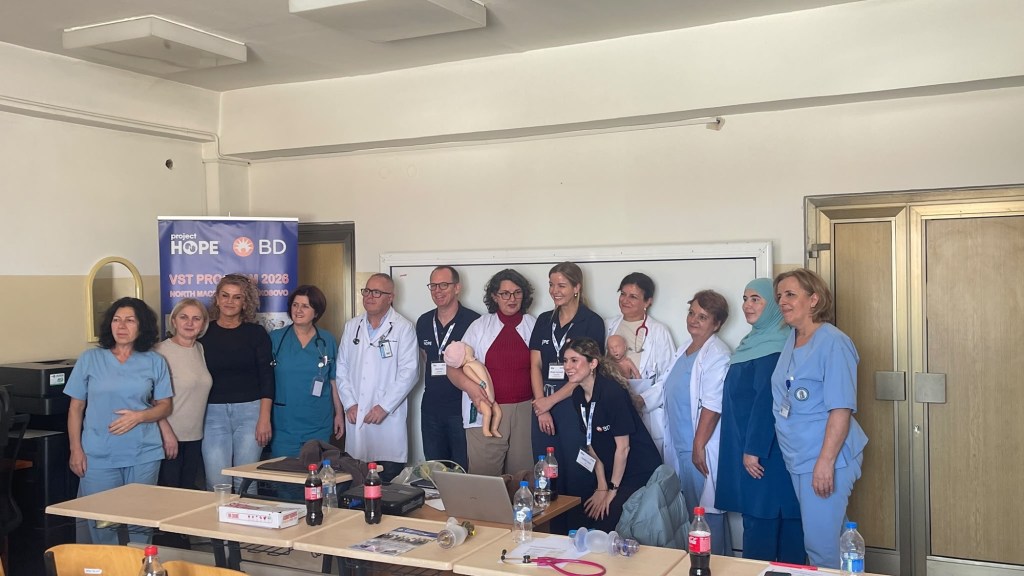
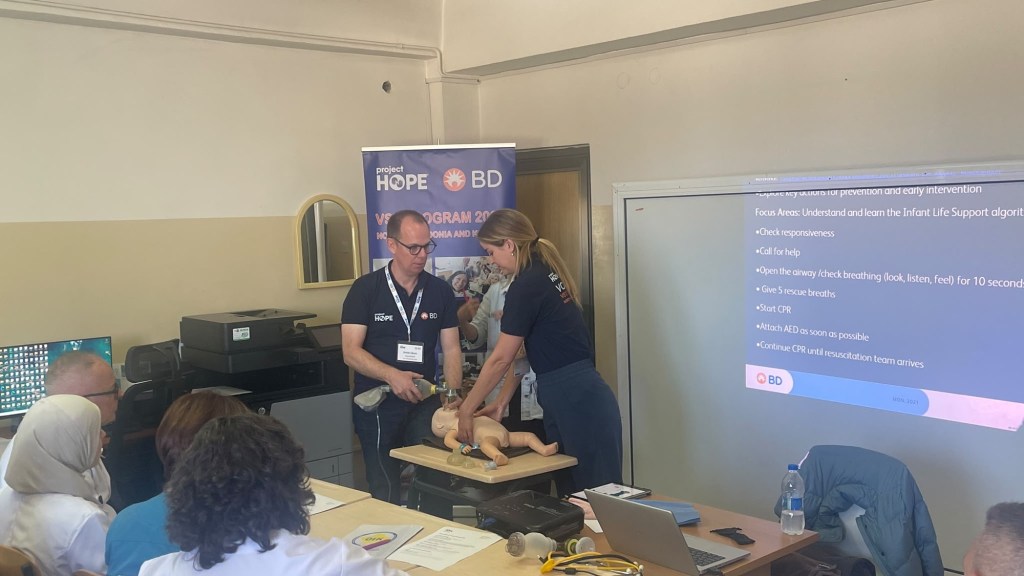
Of course, I got behind on my writing because the days have gotten incredibly busy. We have been waking up between 5:30 and 6:30am each day to drive 2-2.5 hours to various hospitals across Kosovo (towns listed above). We typically teach from around 9-9:30am (once we find the right hospital, location, people, and parking), until 12:30 or 1pm, and they usually convince us to stay for lunch or a coffee afterwards. They don’t have much, but they are so incredibly hospitable. Furniture gets moved, Turkish coffee gets brewing, and hugs are had. It’s their version of rolling out the red carpet. If you even set out a coffee pot, before you know it, their team will have it hooked up and be asking you if you want cream and sugar. They just jump right in.
The first week, we had a driver named Miko, who was hilarious – He’d be super quiet, but always listening, as evidenced by funny comments made under his breath every now and again. He got increasingly comfortable with us throughout the week. We also have an interpreter/translator join us each day, which has been an interesting way to teach. Some of them can only handle one line at a time, so it can take a while to get through the material. Others, like one guy who told us to call him “Spike”, can handle an entire story and translate it in an instant. You can tell which ones really get the full meaning across, especially when we try to fit in a joke here and there. We thought we’d have the same person each day so they could get a hold of the material, but it’s been a different one every time. As Sorcha, our fearless leader always says, “pivot, pivot, pivot.”
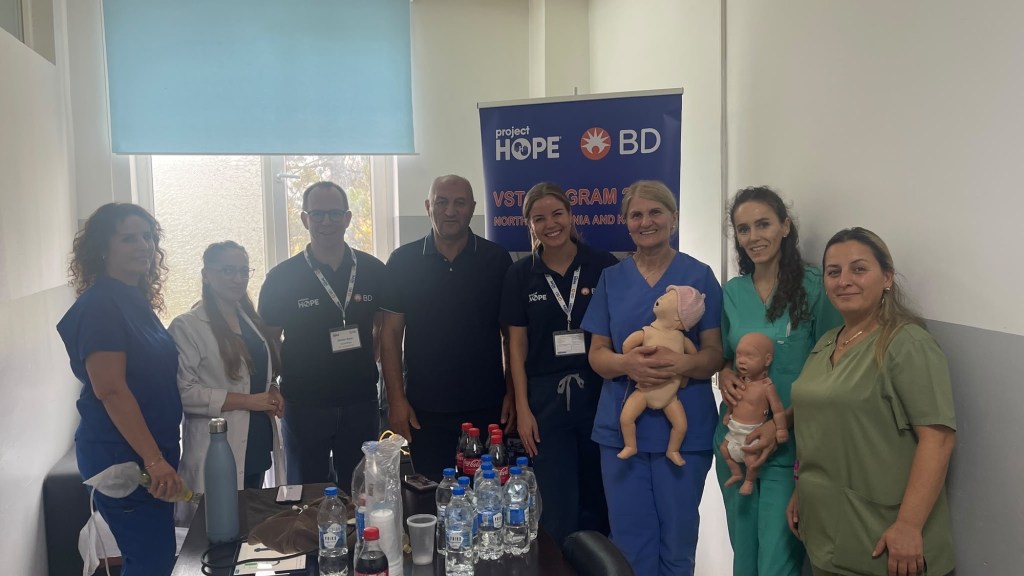
The days have blurred together a bit, especially because many of the things we are seeing are the same… We are teaching mainly neonatologists and gynecologists and occasionally some nurses and “babysitters” (guessing this is like a CNA, e.g.) It’s been typical that they don’t know we’re coming most of the time, despite it being communicated from higher ups, and they’re often disappointed they didn’t get more folks involved for the trainings. At the same time, it’s always worked out, and they are SO appreciative. They make a few phone calls, and people start rolling in. The least attendees we’ve had was in Metrovica, when we only had 5-6. Other days, we typically have 15-20. Some of the nurses stay after a night shift for the trainings, and most of the doctors work 24-hour shifts. Sometimes there also seems to be a bit of beef between the neonatologists and gynecologists, and one time one of the neonatologists said “there are no stupid questions, just stupid answers” in response to one of the gynecologists’ questions. Was hilarious in our opinion. I guess it’s the Albanian way of being (most people in Kosovo speak Albanian), but they are LOUD. They often seem like they are yelling at each other, or us, but it’s just the way they communicate. The silver lining is that they are very engaged and passionate. Also, “po” means yes in Albanian, which is funny every time, and “yo” means no. So you can imagine, when we ask a question to the class, it’s a chorus of “po po po” or “yo yo yo.” We have committed to trying to learn a new word/phrase each day.
The conditions have been tough though. We’ve learned that they rarely have IV materials and therefore don’t have IV access for babies most of the time… in Metrovica, they don’t at all. As a result, every hospital we’ve been to so far practices early intubation during resuscitation attempts and gives Epi down the ET tube. Their doses are all wrong, and we try to explain that the absorption down the tube is highly unknown/unreliable and as such we recommend using a higher dose (like 10x)… but they are typically doing their best with what they have. We have learned to adapt and be understanding of their circumstances rather than patronizing or highlighting their mistakes. Dimitri is especially good at this.
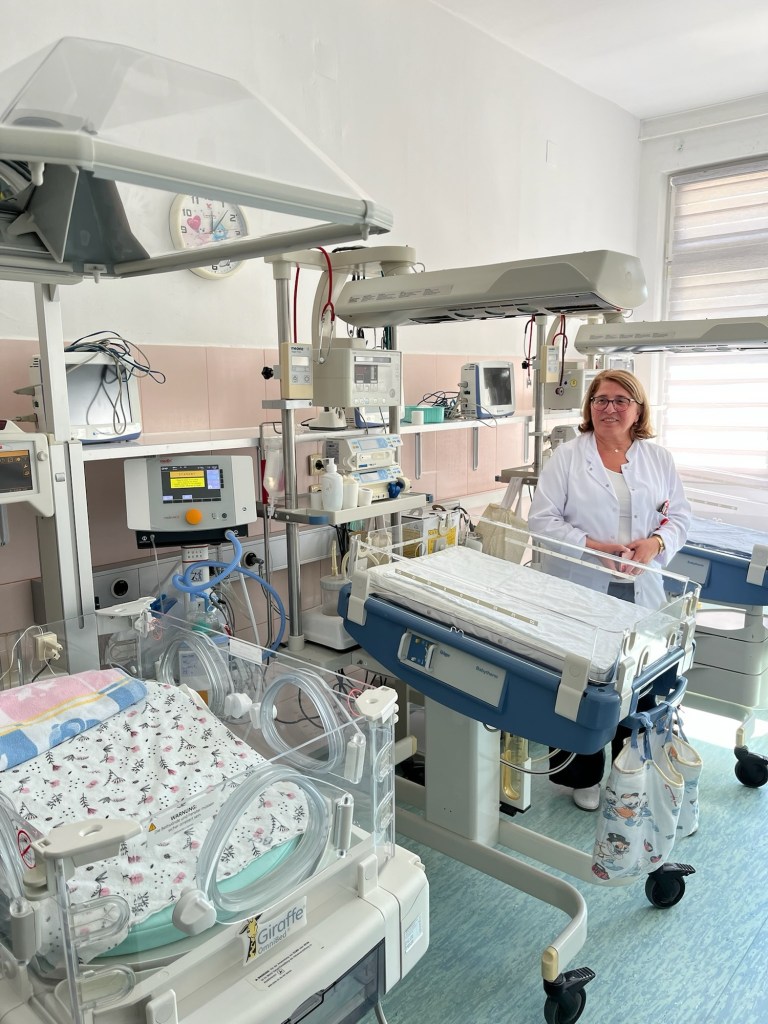
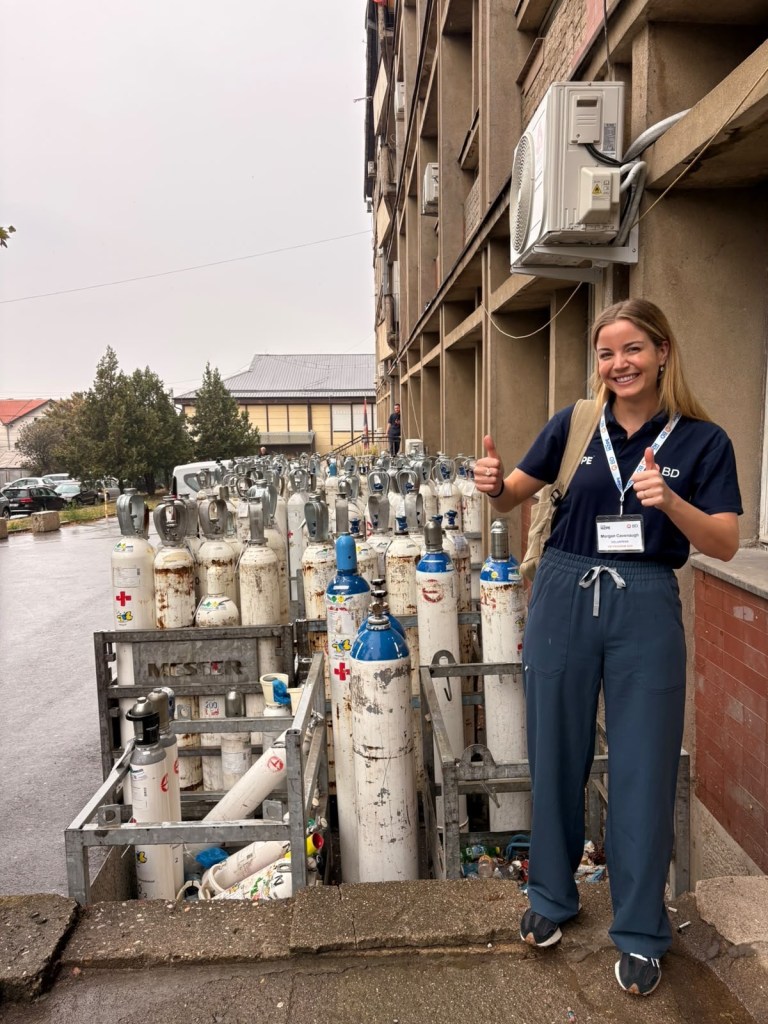
The majority of women (~60%) have C-Sections because there don’t have epidural catheters or other pain management options for vaginal birth. They are able to utilize spinal anesthesia for C-Sections or sometimes even general if needed or preferred. The older nurses say that “the younger generations don’t want to endure pain”, so they elect to get C-Sections more often. The neonatal death rate they report is around 10 in 1,000 to 1,500, but who knows if that is accurate. Several of them don’t have intensive care either, so they have to transfer the babies ~1.5 hours away (typically to Prishtine, which we are going to next week). This involves a bumpy ambulance ride with an incubator that is not equipped for this kind of transfer, and giving up some of their already sparse staff to provide emergency care en route. They have very limited supplies, even basic things like masks, catheters, and tape measures. For example, we’ve seen delivery rooms where it’s clear they reuse the same oxygen tubing and mask for who knows how many patients. Ironically, it’s more common for them to have some fancy high-tech thing that was donated than the basic equipment they actually need. This is frustrating. They typically want to show us their ward after the trainings too, which has been very nice of them and also helpful to better understand what we are working with. Every place is a public hospital and relies entirely on donations to function; patients pay nothing; there really is no healthcare system. The government just stands up the physical hospital and pays the staff a small wage. It has been eye opening to say the least, and I’ve been trying to take down notes of what they need so that I can support some donations afterwards in partnership with Project HOPE.
All that to say, this is the beauty of teaching CPR. We are teaching basic, foundational skills to help these healthcare workers save more babies’ lives with minimal equipment. In that way, it is incredibly rewarding and feels we are moving the needle to continue improving the neonatal survival rate. I think simplifying in these cases is the best route – when we have debriefs (every day around 6pm), we’ve noticed more frustration in our colleagues who are trying to teach things like Advanced Patient Monitoring and PICC line insertions. It’s just too complicated, and we’ve seen rooms full of high tech donated equipment that doesn’t get used. One of the neonatologists told us that they were instructed not to use some of their CPAPs that the warranty was expired for as well… we said, well… just use it anyway.
One of the biggest takeaways for me has been how appreciative they are for the training. When I teach at home, it’s like people want it to be over as quickly as possible. It’s just a requirement for their job. Here, they are practically hanging on our every word, asking loads of questions, sharing personal stories, and eagerly practicing hands-on with the mannequins. It’s truly night and day to teaching in the states. To add onto that, it’s not uncommon for them to say they haven’t had BLS training in 20 years, so this is incredibly meaningful to them.
Last comment for now 🙂 one time when I was demo-ing, I absentmindedly said “one Mississippi, two Mississippi…” when I was counting, and a few of the ladies started saying it when they’d practice. It was absolutely adorable, and I will smile now thinking that some doctor in Kosovo is counting in Mississippis while giving CPR and saving a patient.
With such long days, there hasn’t been much time to reflect fully, but I do know that this is the good life. I am so grateful to be here and feel it in my bones this is what I should be doing.


Leave a Reply